CRESTVIEW • NORTH OKALOOSA
Mobile Home Demolition
Mobile home demolition in Crestview, FL with planning for ownership records, permits, utilities, dismantling, debris hauling and cleanup.
QUICK ANSWER
What does this service include?
850 Demolition evaluates mobile and manufactured home demolition in Crestview and supported Okaloosa and Walton County communities after ownership records, local approvals, utility disconnections, regulated-material responsibilities, attachments and access have been reviewed. Single-wide and double-wide projects are quoted according to the actual unit, site and final condition rather than a flat size assumption.
PLANNED REMOVAL
A clear scope before anything comes apart.
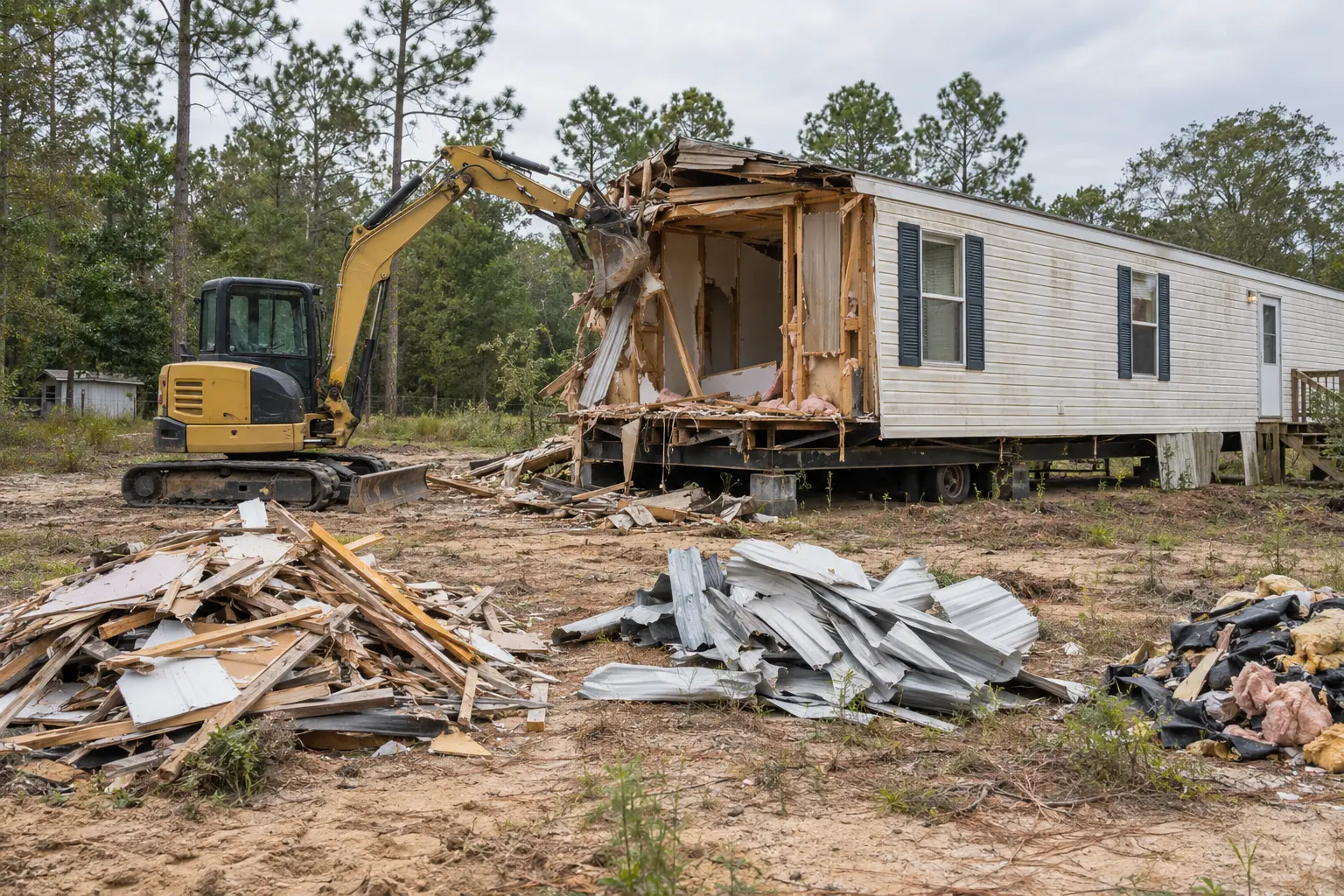
A mobile home is a layered demolition project: exterior skin, framing, insulation, interior finishes, appliances, skirting, tie-downs, utility connections and a steel chassis can all require different handling. Porches, additions, roof-overs, sheds, concrete and abandoned contents may add more work than the unit itself. A clear estimate separates each part and states what remains below or beside the home.
We document the unit, contents, attachments, chassis or foundation components, utilities, access and desired turnover condition, then identify the approvals and qualified-provider responsibilities required before scheduling. After those prerequisites are confirmed, the listed structure is dismantled in controlled sections, ordinary debris is sorted and hauled, and the work area receives the cleanup described in writing. Moving an intact mobile home, title work, asbestos or regulated-material abatement, septic abandonment, utility trade work, imported fill, engineered preparation and finish grading are not included unless separately assigned and expressly listed.
Use the mobile-home demolition planning checklist before estimating for the photos, utility details, access notes and slab decisions that help define a clear scope.
WHAT HELPS US ESTIMATE
Send useful details the first time.
- Unit size, number of sections, approximate year, construction and current condition
- Ownership, title or disposal documentation and local permit responsibility
- Electric, gas, water, sewer, septic and communications status
- Contents, appliances, tanks and potentially regulated materials
- Porches, additions, roof-overs, skirting, tie-downs, chassis and foundation type
- Driveway, gate, overhead clearance, ground conditions, loading area and final surface
SCOPE & COST FACTORS
What changes a mobile home demolition estimate?
Two projects with similar dimensions can require different crews, equipment and hauling. Material type, attachment points, access, weight, utilities and the requested final condition all matter. A useful estimate separates the core removal from optional work instead of hiding everything in one vague line.
- Unit size, number of sections, approximate year, construction and current condition. This changes the labor, equipment or protection plan and should be visible in the estimate.
- Ownership, title or disposal documentation and local permit responsibility. A clear photo or written answer helps prevent a surprise after the crew arrives.
- Electric, gas, water, sewer, septic and communications status. We confirm this detail before scheduling so the removal method matches the property.
- Contents, appliances, tanks and potentially regulated materials. If it is unknown, we flag it for an on-site review instead of guessing.
- Porches, additions, roof-overs, skirting, tie-downs, chassis and foundation type. This changes the labor, equipment or protection plan and should be visible in the estimate.
- Driveway, gate, overhead clearance, ground conditions, loading area and final surface. A clear photo or written answer helps prevent a surprise after the crew arrives.
BEFORE THE CREW ARRIVES
How to prepare the property
Keep people and pets away from the work zone, identify anything that must remain, and move vehicles from the loading route. Confirm who is responsible for utility disconnections and permits when they apply. Do not cut, disconnect or destabilize the structure before the scope has been reviewed.
For the fastest first review, send the address, wide photos, close photos of connections, approximate measurements and a photo looking from the project toward the street. Tell us whether debris, contents, concrete, fill or grading should be included.
A COMPLETE WRITTEN SCOPE
Know what “finished” means before work starts.
Removal limits
The estimate should identify each listed component and anything intentionally left in place.
Hauling and disposal
It should say whether loading, transportation and ordinary disposal are included.
Final condition
Rough cleanup, exposed fasteners, holes, concrete edges, fill and grading should be addressed in writing.
The pre-demolition utility guide separates provider disconnections, qualified trade work, 811 locating, private facilities and proof needed before demolition or excavation begins.
BEFORE A DATE IS RESERVED
Complete the project prerequisites in sequence.
A structural demolition date depends on a defined scope, correct jurisdiction, required approvals, utility documentation, regulated-material responsibilities, equipment access and a workable debris plan. Crew availability alone does not make the property ready.
Use the phase-by-phase demolition timeline guide to organize these responsibilities without assuming a guaranteed permit, start or completion date.
WORK PERIOD & HANDOFF
Separate planning time from physical demolition.
The building may be removed in a shorter period than the approvals and coordination that come before it. Weather, inspections, disposal, concealed conditions and scope changes can still affect the sequence after mobilization.
Define what remains—slab, foundation, utilities, excavation and final grade—before scheduling. Cleanup, rough grading and a construction-ready pad are not interchangeable promises.
Small, non-structural removal projects may have fewer requirements than full building demolition, but permit, utility and property rules depend on the exact scope and location. Requirements are reviewed before work; never disconnect live utilities or assume a project is permit-free.
COMMON QUESTIONS
Mobile Home Demolition questions
Do I need a permit or utility releases?
Mobile home demolition commonly requires local approval and confirmation that utilities are safely disconnected. Requirements vary, so the property and responsible parties must be verified first.
Do I need the mobile home title?
Ownership, title and disposal documentation requirements depend on the unit and local or state records. We ask about them during estimating so the correct process can be confirmed before demolition.
Can you remove a porch, addition and contents too?
Yes, when each part is visible, evaluated and listed in the estimate. Attachments and contents can materially change labor, equipment and disposal volume.
Is the steel frame or foundation included?
Not automatically. Chassis sections, tie-downs, piers, footings, slabs and other below-unit components should be identified separately because removal limits, weight, excavation and final grading vary.
Will the site be ready for another home afterward?
Not automatically. Visible cleanup or rough grading is different from an approved replacement-home site. Utilities, septic, foundation design, fill, drainage, compaction and permits must be coordinated for the next use.
Before equipment is routed across the parcel, use the septic-system and well demolition guide to map tanks, drain fields, well components and private lines. Building demolition does not automatically include regulated septic or well abandonment.
Use the demolition cost-factor guide to compare scope, structure, access, utilities, approvals, debris, concrete and final condition without relying on a one-size-fits-all square-foot price.
CRESTVIEW DEMOLITION ESTIMATES